Artificial intelligence is advancing at a breakneck pace. In many industries, it is transforming the way people work, automating certain tasks, and redefining professional roles. The field of translation is no exception, and machine translation has now become an indispensable tool.
Behind these advantages, however, lies a more nuanced reality. Unlike humans, artificial intelligence does not truly understand language: it processes it using statistical models and algorithms. It can produce impressive results, but it remains unable to capture all the contextual and cultural nuances or accurately convey the intended meaning of a message.
This is where post-editing in translation comes into play—an increasingly common practice that offers numerous advantages and highlights the importance of human intervention.
What is Post-Editing?
Post-editing refers to all human interventions made to a text that has been pre-translated using artificial intelligence. The goal is simple: to turn a raw machine-generated translation into a clear, professional-quality text. Post-editing is usually performed by a qualified translator.
Essentially, the translator does not start from scratch. They work from a first draft generated by a machine translation engine. Their role is to correct, edit, rephrase, and sometimes restructure the text to improve its clarity, accuracy, and flow.
Post-editing thus falls somewhere between translation and proofreading. It does not involve translating a text in its entirety or revising a human translation, but rather improving an automated output.
The History of Post-Editing: A Need for Productivity
Post-editing in translation first emerged for commercial reasons: the goal was to translate larger volumes more quickly and at lower costs. The rise of post-editing is directly linked to the surge in demand for translation. Several factors account for this growth:
- The Growth of the Web and e-commerce
- The globalization of trade
- Legal translation requirements in certain sectors
- The proliferation of digital content
With translation volumes continuing to grow, human translation alone is no longer sufficient to meet demand. At the same time, over the past decade, machine translation engines have evolved and improved significantly compared to what was available in the past. Machine translation has therefore emerged as a solution for quickly producing large amounts of text.
However, since the raw output of machine translation remains imperfect, post-editing has become an essential step in ensuring the final quality. It combines the speed of the machine with the translator’s critical thinking.
Texts Best Suited for Post-editing and Machine Translation
Post-editing is not suitable for all types of content. It is particularly effective for structured and repetitive texts that use simple terminology and a relatively neutral style, such as technical documents, user manuals, product descriptions, institutional content, and standardized legal texts. In these situations, machine translation provides a fairly reliable foundation that the translator can quickly refine.
On the other hand, post-editing is less suitable for creative, loosely structured, or highly contextual content, such as literature, advertising, or marketing materials. These texts rely on wordplay, cultural nuances, and specific stylistic choices that machines struggle to reproduce accurately. In such cases, a fully human translation is generally the best option to preserve the impact and intent of the message.
Types of Post-Editing
There are two main approaches to post-editing: light post-editing and full post-editing.
Light Post-Editing
The translator works directly on a text generated by a machine translation engine, without any additional tools. The text may contain numerous errors or awkward phrasing and requires more extensive work, or even rewriting.
Full Post-Editing
Machine translation is combined with computer-assisted translation tools, such as:
- translation memories;
- terminology databases;
- specialized glossaries.
These tools help produce a clearer text from the start, which makes the post-editing process easier.
Quality Levels
Depending on the client’s needs and the type of project, two levels of quality are available:
- Quick Post-Editing: Correcting major errors to produce a comprehensible text
- Full post-editing: Performing an in-depth review to achieve a quality comparable to that of a human translation
Language Challenges
Machine translation generates errors that translators must learn to identify quickly. Here are the most common ones:
- Meaning errors
- Awkward sentence structures
- Incorrect word order
- Poor handling of idiomatic expressions
- Terminological inconsistencies
- Punctuation or capitalization issues
Machine errors can be systematic or difficult to detect without careful reading. The challenge, therefore, is to take effective action in order to strike a balance between quality and productivity.
Check out our blog posts on AI to learn more about this topic, including blind spots, translation errors, and accuracy in regulated industries.
Essential Skills
Post-editing requires a combination of linguistic, technical, and analytical skills. The way of working and thinking is a bit different from traditional translation. In post-editing, the translator must be able to quickly assess a machine-generated translation to determine what should be kept, corrected, or reworded.
To perform their job effectively, they must be fluent in both the source and target languages, have a thorough understanding of the subject matter, and be comfortable using technological tools such as computer-assisted translation software, translation memories, and terminology databases.
In addition to technical skills, post-editing also requires a high degree of adaptability and concentration. The job involves constantly juggling validation, correction, rewriting, and verification, often under tight deadlines. Translators must therefore demonstrate precision, efficiency, and critical thinking to ensure high-quality results while maintaining a high level of productivity.
The Main Challenges of Post-Editing
Standardization: A Relatively New Framework
For a long time, post-editing was implemented in translation agencies without a clear framework. The lack of standards has created grey areas in practice, particularly regarding quality expectations, work methods, and conditions.
It wasn’t until 2017 that an international standard, ISO 18587, was established to provide a framework for post-editing. It defines the required skills, best practices, and professional expectations. This standardization helps structure the profession and recognize it as a fully fledged specialty.
Training: A Key Issue
Today, many translators are called upon to do post-editing, sometimes right from the start of their careers. Although it shares similarities with revision, it requires a different approach.
It is therefore essential to incorporate post-editing—both in theory and in practice—into translation training programs in order to prepare future translators for this widespread practice.
Ethics and Responsibility
Post-editing raises important questions about ethics and responsibility, because even though a machine produces the first draft of a text, the translator is ultimately responsible for the final result.
It is therefore essential to maintain professional standards and adhere to the required criteria. The use of technology should never be an excuse for lower quality. The translator’s code of ethics is based on a simple principle: regardless of the tools used, the final text must meet the client’s expectations and adhere to linguistic standards.
Technological Challenges
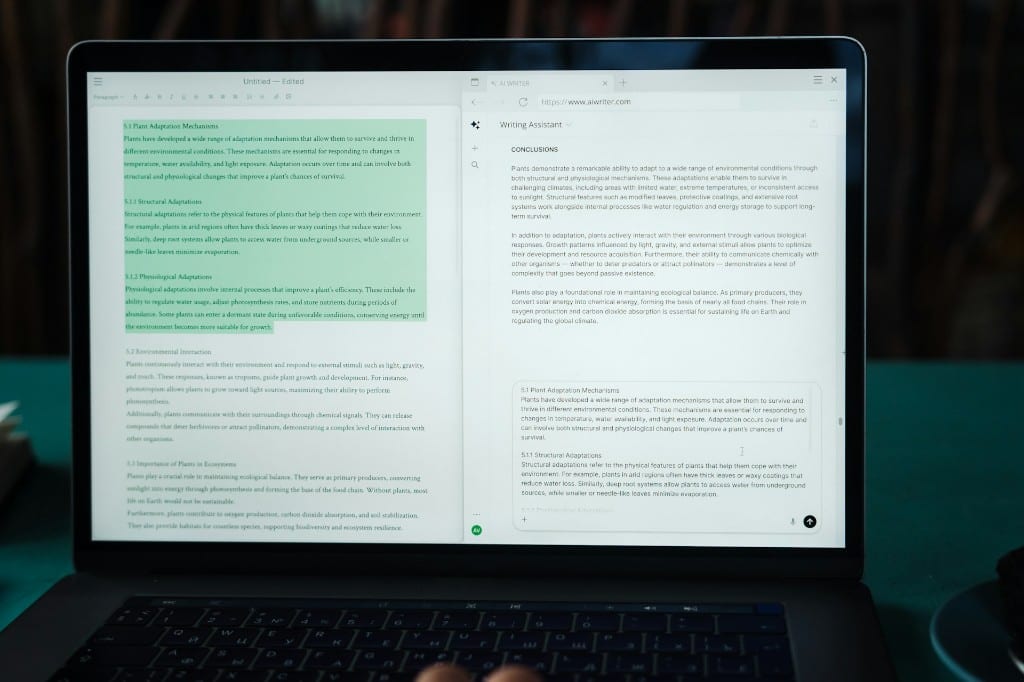
The post-editing process is primarily carried out on a computer, often in complex environments that include:
- text segments;
- multiple interfaces;
- specialized tools.
From an ergonomic standpoint, computer tools are not necessarily suited to the needs of translators and can cause eye strain, cognitive overload, or a loss of efficiency.
Tools should evolve based on the actual needs of translators, not just technical constraints. Humans must remain at the centre of research and tool design, as machine performance relies entirely on human expertise.
Pricing
One of the major challenges in post-editing is related to compensation: time savings are mistakenly equated with cost savings. The post-editing process involves numerous tasks of varying types that are performed in succession, and the translator must adapt to a number of cognitive and technical constraints. High-quality post-editing requires specific expertise and skills, and saving time does not necessarily mean a reduction in workload.
Even though the goal of post-editing is to translate more content more quickly, it is important to challenge preconceived notions, promote the practice, and raise clients’ awareness of its complexity.
Maxime Collins Inc. offers professional translation and post-editing services for all types of content. Visit our website to learn more!
Conclusion: The Future of Post-Editing
Post-editing now plays a central role in translation and is a long-term trend in the evolution of the translation profession. It enables us to meet demands for speed and volume while maintaining a professional standard of quality. As the profession continues to evolve and take a more structured form, its standards, practices, and skills are becoming more clearly defined.
Now more than ever, the translator’s role is essential to understanding the context, interpreting nuances, and adapting the message. The translator becomes a specialist capable of collaborating with the machine, overcoming its limitations, and leveraging its potential.
Artificial intelligence can generate text, but human input will always be necessary to understand and convey all the nuances of a living language.
FAQ
What is post-editing in translation?
Post-editing involves reviewing and correcting a text generated by machine translation in order to improve its quality, fluency, and accuracy. The translator steps in to adapt the content to the context, the target audience, and linguistic standards.
What is the difference between machine translation and post-editing?
Machine translation uses artificial intelligence to generate a rough draft, while post-editing is the work done by a human to correct and improve that text. The machine generates a first draft, but the translator ensures the final quality.
What types of texts are best suited for post-editing?
Post-editing is particularly effective for technical texts, user manuals, product descriptions, corporate content, and certain standardized legal documents. Creative or marketing content generally requires a fully human translation.
Can post-editing replace translators?
No. Even though artificial intelligence improves production speed, it doesn’t truly grasp the cultural nuances, tone, or intent of a message. The translator’s role remains essential to ensuring the quality and accuracy of the final text.
What are the benefits of post-editing?
Post-editing makes it possible to translate large volumes of content more quickly while maintaining a professional standard of quality. It combines the speed of machine translation with the translator’s linguistic expertise and judgment.